
Exhibitions
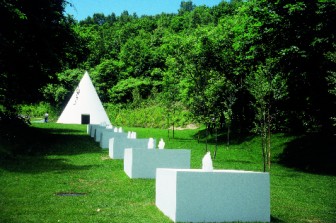
The Japan of Dani Karavan
Current Exhibition
Dani Karavan |1930-2021| translated his artistic language without losing his roots and created a dialogue between his works and the Japanese place and experience. Three central works, in terms of their scope and level of conservation, are located along the length of Japan, on three different islands: On the northern island of Hokkaido, the "The Way to the Hidden Garden" is located in a sculpture forest on the outskirts of Sapporo; on the main island of Honshu, in Nara Prefecture, is the Murou Art Forest; and on the southern island of Kyushu, where the work "Bereshit" stands. This exhibition focuses on these three works.
Dani Karavan‘s environmental art includes the elements of experience, reaction, and the connection between it and the visitor. The visitor is not an external factor, a stranger, but must move within the work to experience it, and the work is not complete without the visitor. Already at first glance, the works invite the visitor to discover them from within. The three works are "site-specific", and any attempt to move them elsewhere will remove them from their unique context to the local history and geography. In the three works there is a discourse between the parts of the work, near or far, and they are a complete work only taken together as a whole.
Saturday, 30.07.22
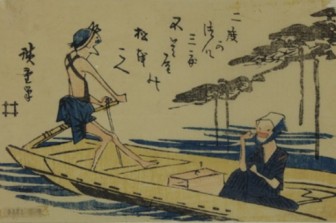
PULLING FACES
New Exhibition
Comic drawings (in Japanese: manga or kyoga) have a long history in Japan, dating back to the religious sphere as early as the 8th century. The drawings were secularized and appeared in the Edo period, from the 17th through the mid-19th centuries, as humorous depictions without religious context.
The collection of works displayed here was created by three artists from the Utagawa school, which is considered one of the leading schools of ukiyo-e ("Pictures from the Floating World"). This genre depicts, in paintings and prints, the popular culture of the period. These works reflect the comic aspect of everyday scenes of human life and its ability to help deal with the difficulties of life. Some focus on facial expressions and others on situations that bring a smile to the face of the viewer. The three artists, Toyokuni, Hiroshige and Kuniyoshi, used to sign their works with a special signature meaning "caricature by the artist". The humor shown here crosses cultures and times and serves as a connecting thread between the daily lives of the people of the past in Japan and our lives in the present.
Saturday, 30.07.22
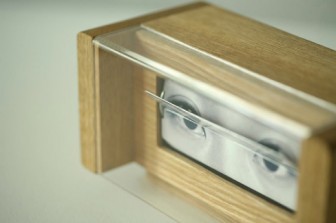
BLINKING – Yasuhiro Suzuki
Current Exhibition
Yasuhiro Suzuki | b. 1979 | is an artist designer. Suzuki does not meet the conventional definition of a designer because his creations are not limited only to aesthetic and useful products. His designs improve our quality of life, thanks to the encounter between them and the environment in which we live.
In a scientific approach interwoven with fine humor, Suzuki expresses his inner world and the way he looks at and experiences the world and the environment. Everyday experiences of joy and fear take center stage in his works. With great talent, Suzuki disassociates objects from their daily and familiar use, and gives them a new identity. Thus, cabbage leaves turn into a bowl, a gun shoots eyedrops and a tree’s leaves are replaced with eyes. Suzuki blurs the line between humans and nature – nature appears in the human body and Man is assimilated into nature.
Illustrations, seemingly simple, are an integral part of his creative process, and through them Suzuki reveals the mechanism of his thoughts. The explanations that accompany the exhibits were written by the artist. The exhibition makes accessible product, illustration, and text, the three dimensions in which the artist deals.
Saturday, 30.07.22
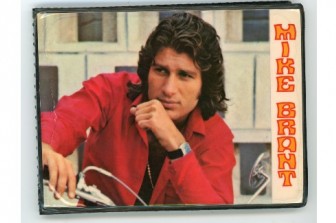
Mike Brant: Till Body Crumbles
Mike Brant is still considered one of the most successful Israeli singers of all time, and an international Israeli legend. In his short career abroad, he recorded dozens of songs that conquered the hit parades, was featured on the front covers of hundreds of magazines, and performed for tens of thousands of fans.
Although Brant’s international career flourished, in Israel he sank initially between Arik Einstein and Yigal Bashan, between Sipurei Poogy of the Kaveret group and Sof Onat Hatapuzim of the Tammuz rock band. He never made it into the canon of Israeli music and entertainment. That said, there has never been an Israeli singer, either before or since Brant, who has attracted as much adulation after his death. Almost five decades since his tragic demise, his albums and songs continue to be sold in large numbers, both in Israel and abroad. Ultimately, in the local context, he can be said to have secured his place in the pantheon of Israeli music.
Saturday, 27.05.23
Time Tunnel - Japan and the Jews
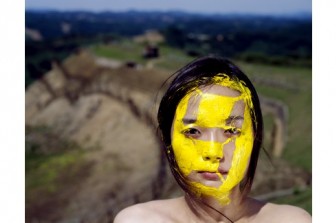
The exhibition "Time Tunnel - Japan and the Jews" marks 70 years of diplomatic relations between Japan and Israel. The exhibition focuses on the meeting point between Japan and the Jews through works of art by Japanese artists that relate to the Jewish narrative of rescue and extermination. The rescue story is based on the humane gesture of the Japanese Vice-Consul in Kaunas, Lithuania, Chiune Sugihara, who, in the summer of 1940, issued over two thousand visas to Japan. In this way, Sugihara saved more than six thousand Jews. Alongside the video installation by SHIMURAbros, rare photographs from 1941 of the Tampei Photography Group are displayed, including photographs of the refugees who came to Japan.
Saturday, 22.04.23
Gil Bar- Downtown Haifa
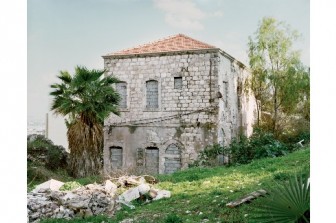
The clusters of abandoned-sealed and ruined buildings are like monuments in the urban landscape - reminders of historical turning points in Haifa's narrative. The city is a collection of buildings with a story, a puzzle of textures that allow for a complex reading of its history and the forces that shaped its unique form. The book and the exhibition Lower Haifa trace a complex urban portrait at a specific point in time. This collection of photographs raises questions regarding the city, its history, its politics, and its future. The layer revealed to us in the photographs will also eventually come to be covered by another layer and will be transformed over the years.
Saturday, 25.02.23
Space for Community Art: Shahar Sivan and Roee Cohen; Tamar Nissim
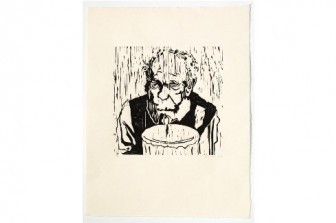
The works presented in these two exhibitions are the result of activities carried out over the past year by three artists of the "Space for Community Art." This program at the Haifa Museums encourages artistic practice that is attentive to the place and the local community, initiating processes in the city's neighborhoods, which reinforce art's social power and increase the public need for art. As part of this program, artists based in the greater Haifa area, selected by a professional committee, receive close curatorial support as well as conceptual and practical training for artistic action in the community. Community members participating in the project play a substantial part in the artistic process.
Saturday, 24.06.23
Body Language
Family activity space
Our body works all the time, even at night, when we sleep: the heart beats and pumps blood to all parts of the body, the lungs fill with air and empty, and there are many other systems in the body that work nonstop so that we feel well. These actions produce heat, which is known as "body heat."
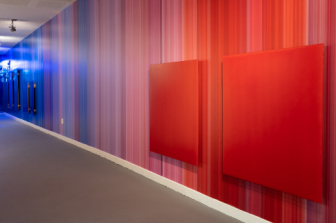
Panels painted in shades of red and blue hang along the wall. They were painted with a special paint sensitive to heat, which disappears in contact with the skin. Try touching the panels and see how your body heat affects the paint.
Saturday, 24.06.23
HANDMADE JAPAN
Now at the museum
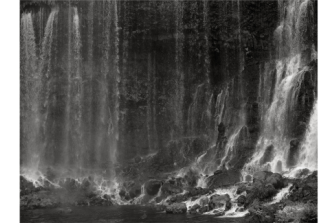
The exhibition "Handmade Japan" focuses on a variety of creative endeavours that characterize Japanese artisanry from the past to the present, as expressed through diverse objects. Some of the objects displayed in the exhibition are from the collection of the museum's founder, Felix Tikotin, and others are the handiwork of local craftsmen from Israel and Japan: Pavel Dibrov, an Israeli kumiko artist (wooden objects decorated with or composed of small pieces of wood); Mo Sela, an artist, carpenter, and musician from Israel; Nobuya Yamaguchi, an iron sculptor, musician, and musical instrument maker living in Israel; Dafna Kafman, a glass artist; Tim Oder, a folding paper artist; Yael Harnik, a textile artist; Saori Kunihiro, a calligraphy and scroll artist from Kyoto; Emi Nakamura, a mizuhiki artist from Tokyo; Simon Fujiwara, a visual artist from Germany; Ichika Yoshida, a calligraphy artist from Tokyo; tops by the master Masaaki Hiroi and selected textile pieces from Adina Klein's Collection among others. The museum walls display photographs taken by French photographer Pierre-Élie de Pibrac during his eight-month journey in Japan, through which he immortalizes Japanese aesthetics in everyday life.
Wednesday, 03.12.25
Can you see its beauty
Now at the museum
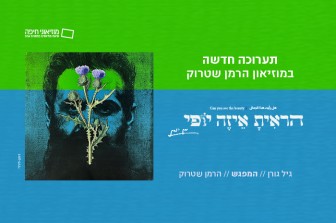
The exhibition presents an intergenerational dialogue, spanning a hundred years, between Hermann Struck and Gil Goren, emphasizing a common perspective, according to which the power of visual imagery is not merely aesthetic, but political, social and educational as well.
Wednesday, 22.04.26
Please contact us and we will contact you as soon as possible