
Exhibitions
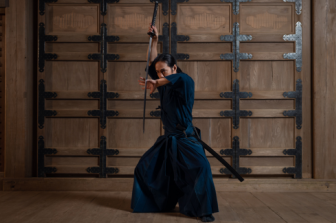
Dō – Spirit of The Way
The exhibition covers a wide range of Japanese arts that bear the suffix "dō" (道) which have shaped the cultural and spiritual landscape of Japan. Dō, which means "way," originates from the Chinese concept of Dao, which was integrated over generations into Zen Buddhism. Both traditions sought to understand the essence of the "way" as an inner and spiritual journey.
Saturday, 30.05.26
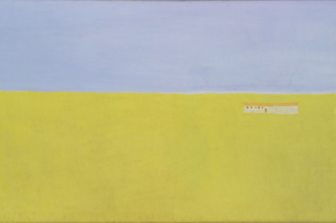
Northern Horizon: A New Perspective on 1970s Landscape Painting in Israel
New exhibition
The Haifa Museum of Art collection, which provides the foundation for this exhibition, reveals a very different 1970s: years of richly colored oil painting, whose forms are grounded in the visible place. The artists whose works are featured here all observed the local landscape closely, rendering it while applying the lessons of contemporaneous international art. They demonstrate a profound internalization of these tendencies that sought to reduce artistic expression to uniform color surfaces and abstract, universal forms, while infusing it with local content and conceptualizing the very essence of the landscape.
Saturday, 27.06.26
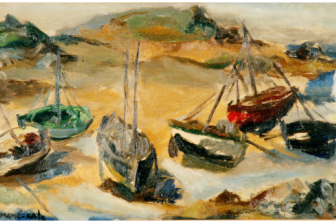
Fishermen and Fish | Fishing Culture in Artifacts from the Haifa Museums Collections
This exhibition invites viewers to observe the environment of fishing villages, blending with the shore and the marine landscape, and to take a quick glance at the narrow streets of markets filled with fresh fish. It also introduces works depicting the world of fishermen peacefully engaged in their craft, as well as the dedication of fishermen anchored in shipyards or venturing out into the vast sea. Viewers are invited to explore different fishing experiences—whether calm, dynamic, or stormy—and to face the challenges posed by nature along with the fishermen. Other works focus on the diversity of types of fish. Finally, upon returning to the shore, one can encounter marine gatherers at work and fishermen focusing on the meticulous task of mending nets, allowing for an inward, meditative experience.
Saturday, 14.02.26
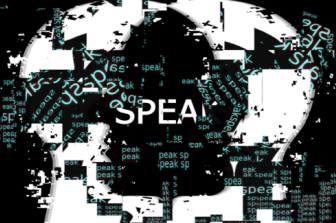
Laila Abd Elrazaq & Dana Mazal Ziv: Mother Tongue
New exhibition
The exhibition emerged from a collaboration between Laila Abd Elrazaq and Dana Mazal Ziv—a video artist and a composer—who, within the framework of the Haifa Museums' Space for Community Art Incubator, invited Arabic speakers from various local communities to reflect on their relationships with language. Excerpts from the interviews are played in the intimate listening booths, accompanied by textual video works in Arabic, Hebrew, and English, which shift between translation of the uttered words and their distortion, visually illustrating how the multiplicity of languages is sometimes experienced as a disturbance. Interview fragments were rendered as choral compositions, which envelop the space.
Saturday, 27.06.26
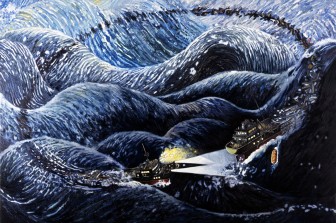
The Wave Effect - From a Japanese to Global Icon
The concept of this exhibition touches on the three elements that make up the Great Wave -- wave, boats, and Mount Fuji. These elements are represented here in the works of Japanese and Israeli artists and are translated into the language of the period in which they were created. The element of the wave is examined through works in which it is a stylized force of nature, an ethereal boundary line, a metaphor for social isolation, and a representation of existential anxiety; not necessarily anxiety related to natural disasters. The element of boats between the waves is associated with works about war in Japanese art and with works dealing with personal and national assimilation in Israeli art. The element of the mountain appears in traditional Japanese works that emphasize different perspectives of the mountain, alongside Israeli artworks which express the attraction to the mountain. The exhibition also gives space to young artists who respond to the work using diverse visual means and in defiant and different ways.
Saturday, 07.06.25
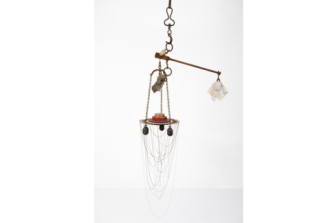
Moshe Roas: Knop and Flower
New exhibition
Moshe Roas's work intuitively fuses diverse, seemingly incongruent materials into a sculptural creation that finds points of equilibrium between weights and textures, between above and below, giving rise to a new material and visual conceptual world. Following a sustained engagement with the Museum's collection of objects from Morocco, characterized by a fusion of grandeur and mysticism, Roas was reminded of artisans of the past, of traditions of sculptural craftsmanship, and of the labor and precision invested in spectacular ornamentation that seeks to master matter and touch the sublime.
Saturday, 27.06.26
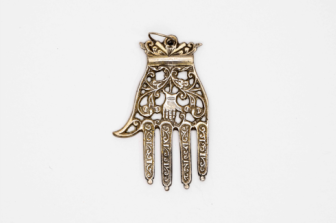
In Search of Lost Body: Moroccan Material Culture from the Museum's Collection
New exhibition
Whether a valuable artifact or a simple piece of cloth, an object is a container of life, carrying the memory of the body that wore it and the hands that crafted it. The physical aspect is present in every object in the exhibition, and all the works on view were made for the human body. For the first time in over 40 years, the exhibition reveals the treasures of the material culture of Moroccan Jews held in the museum, most of which were given to the Haifa Museum of Ethnology between 1950 and 1970 by immigrants from Morocco, mainly accomplished seamstresses and tailors.
Saturday, 27.06.26
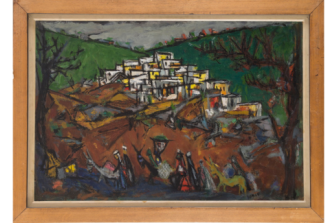
Facial Topography: Israeli Art from the Museum's Collection
New exhibition
The permanent exhibition showcases masterpieces from the Haifa Museum of Art's collection, which encompasses over 8,000 works, charting major trends in the history of local art. It spans works from the late 19th century to the present, where face and topography are mutually reflected, indicating affinities between the furrows of plowed earth and furrowed faces, between sun-scorched soil and tanned skin, between cracked asphalt and wounded flesh.
Saturday, 27.06.26
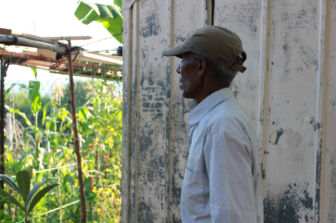
The Space For Community Art: Gevere Ribka | Belay
The works in the exhibition record male figures who have struggled for decades with an unabated will to adjust to a new place. Ribka chose to document them here, understanding that they have built a place that allows them to work at something they are good at, a place where they are able to create something new and reap the fruits of their success.
Saturday, 18.10.25
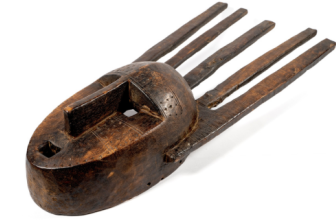
Africa Calling: The African Collection Revealed
Now at the museum
The Museum's collection of African ethnographic artifacts, which has remained hidden from public view for 30 years, includes approximately 1,000 pieces, donated by avid collectors and dedicated donors from around the world, who have intensely explored specific cultures and regions of Africa. These works were once exhibited at the Haifa Museum of Ethnology, founded in the early 1950s and active on Arlozorov Street until 1995. In unveiling these works again, "Africa Calling" calls on its viewers to immerse themselves in the diverse and vibrant cultures of Africa.
Saturday, 03.01.26
Please contact us and we will contact you as soon as possible